Ossip Bernstein


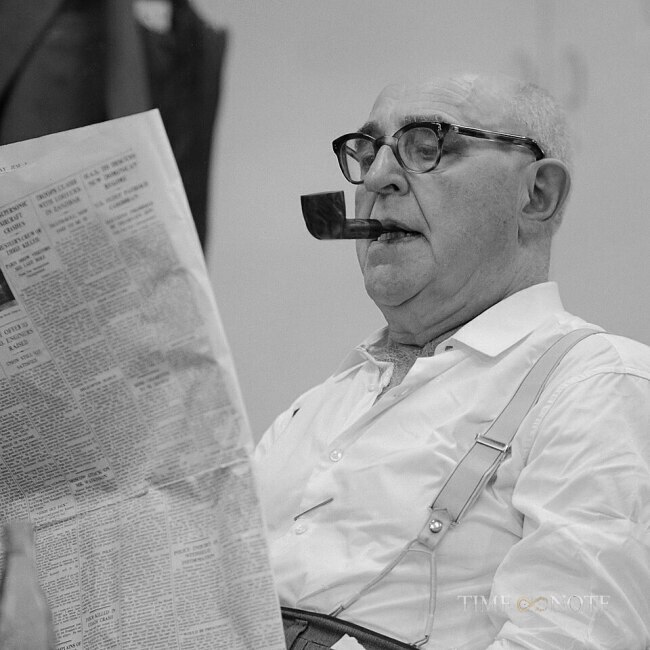
- Birth Date:
- 20.09.1882
- Death date:
- 30.11.1962
- Length of life:
- 80
- Days since birth:
- 52523
- Years since birth:
- 143
- Days since death:
- 23232
- Years since death:
- 63
- Patronymic:
- Samoil
- Person's maiden name:
- Осип Самойлович Бернштейн
- Extra names:
- Osips Bernšteins, Осип Бернштейн
- Categories:
- Advocate, lawyer, Chess player, Grand Master, Lawyer, PhD , Victim of repression (genocide) of the Soviet regime, victim
- Nationality:
- jew
- Cemetery:
- Set cemetery
Grok verdict: TRUE history:
He stood against a wall in Odessa. 1918. 12 other men beside him. Rifles raised. The Bolshevik officer read down the list of names. He stopped. He read one name again. He looked up slowly. "Is there a Bernstein here?" One man stepped forward. And everything changed. Ossip Samoilovich Bernstein was born on September 20, 1882, in Zhytomyr, in the Russian Empire. He was the kind of man who could walk into any room and command it not with his fists, but with his mind. By age 20, he was already competing in chess tournaments across Europe. By his mid-20s, he had earned a law doctorate from Heidelberg University.
By 30, he was one of the most feared chess players on the continent, regularly finishing in the top 5 at major European events. But Ossip didn't just play chess. He built a life. He became a financial lawyer. He accumulated serious wealth. He raised a family. He was, by every measure, a man of standing — exactly the kind of man the Bolsheviks were hunting. 1917. The Russian Revolution tears through the empire like a blade. The czar is executed. The banks are seized. The aristocracy is dismantled overnight. And anyone connected to the old financial world becomes an enemy of the new state. Ossip is working in Odessa as a legal advisor to bankers. That is his crime. Not violence. Not sabotage. Not sedition. Just his job. In 1918, the Cheka — the Bolshevik secret police, feared across Russia for their ruthlessness — arrest him. The charge is vague but the sentence is not. Crimes against the state. Death by firing squad. He is given no trial. There is no courtroom. No lawyer. No appeal. A minor official simply reads a list of names, and Ossip's name is on it. Here is what most people don't know about that morning in Odessa. As the firing squad lines up — 13 men against a wall, rifles already raised — a superior officer arrives and asks to see the prisoner list. He runs his finger down the names. He stops at one. He knows that name. Not from a banking ledger or a government file. From a chess tournament. From years of reading match results in the papers. From following the career of one of Europe's most gifted players. He walks toward the wall. "Are you the chess player?" he asks Bernstein. Ossip, standing 36 years old with his back to a wall and rifles pointed at his chest, says yes. The officer makes him an offer. They will play a game of chess. If Ossip wins he walks free. If he draws, or if he loses he is shot along with the rest. Think about that for a moment. Not just a life-or-death game. A game where even a tie means death. Only a complete victory saves him. And he must play it now, in this moment, after hours of waiting to be executed, with the adrenaline of terror still coursing through his body. Ossip Bernstein sits down across from the officer. He wins in short order. The officer stands. He orders Bernstein released immediately. The other 12 men are shot. Ossip walks out of that yard breathing air he was never supposed to breathe again. He boards a British ship and escapes to France. But here is what makes his story almost impossible to believe — this was only the first catastrophe of his life. 1929. The Great Depression wipes out the fortune he rebuilt in Paris. Everything gone. He starts over at age 47. 1940. Nazi Germany invades France. Bernstein is Jewish. He cannot stay. He flees again — this time to Spain, settling in Barcelona with nothing but his name and his mind. 3 times. He loses everything 3 times. And 3 times, he builds again. And the chess never stops. 1950. FIDE, the world chess federation, awards Ossip Bernstein the official title of International Grandmaster — one of the first players ever to receive it. 1954. At age 72, Ossip enters the Montevideo tournament. His opponent, grandmaster Miguel Najdorf, is so confident of an easy win against the old man that he convinces the organizers to double the first-place prize money — certain he will collect it. Bernstein defeats him in 37 moves. The game is so brilliant it wins the tournament's Brilliancy Prize. Najdorf had laughed. Bernstein had played. On November 30, 1962, Ossip Bernstein died in a sanatorium in the French Pyrenees. He was 80 years old. He had survived a firing squad. 2 world wars. 3 lost fortunes. And decades of an era that tried, again and again, to erase men like him. What saved him in that Odessa yard wasn't luck. It wasn't mercy. It was 20 years of sitting across from opponents who wanted to break him and refusing to let them.
Ossip Samoilovich Bernstein (20 September 1882 – 30 November 1962) was a French chess player and businessman. He was one of the inaugural recipients of the title International Grandmaster from FIDE in 1950.
Biography
Born in Zhytomyr, Russian Empire, to a wealthy Jewish family. Bernstein grew up in Russian Empire. He earned a doctorate in law at Heidelberg University in 1906, and became a financial lawyer.
Bernstein was a successful businessman who earned considerable wealth before losing it in the Bolshevik Revolution. He earned a second fortune that was lost in the Great Depression, and a third that was lost when France was invaded by Nazi Germany in 1940. His Jewish origins meant that he could not remain in Nazi-occupied France, and he was forced to flee to Spain and settled in Barcelona.
According to Arnold Denker, who was told by Edward Lasker, a 36-year-old Bernstein in 1918 was arrested in Odessa by the Bolshevik secret police whose purpose was to investigate and punish "counterrevolutionary" crimes. Bernstein was to be shot by a firing squad for serving as a legal advisor to the banking industry. On the day of his execution, Bernstein watched as the firing squad lined up before him. At the last minute, a commanding officer asked to see the list of prisoner names and recognized Bernstein's name as he was a chess enthusiast. After confronting Bernstein about his identity, the commanding officer offered him a deal he couldn't refuse. They would play a game of chess. If Bernstein won the match, he would win his life and freedom. However, if he drew or lost, he would get shot along with the rest of the prisoners. Bernstein won in short order and was released. He escaped on a British ship and settled in Paris.
Bernstein died in a sanatorium in the French Pyrenees in 1962.
Chess career
In June 1902, Bernstein won at Berlin. In July–August 1902, he took 2nd, behind Walter John, at Hannover (the 13th DSB Congress, Hauptturnier A). In 1902/03, he won at Berlin. In September 1903, he took 2nd, behind Mikhail Chigorin, in the Kiev 1903 chess tournament (the 3rd All-Russian Masters' Tournament). In 1903/04, he tied for 2nd–3rd with Rudolf Spielmann, behind Horatio Caro, at Berlin. In July–August 1904, he tied for 4th–5th at Coburg (14th DSB Congress). In August 1905, he tied for 4th–5th at Barmen (Masters A). In 1906, he tied for 1st with Carl Schlechter at Stockholm. In 1906, he tied for 4th–6th at Ostend. In 1907, he tied for 1st with Akiba Rubinstein at Ostend (Masters A). In 1909, he took 5th at Sankt Petersburg. In 1911, he won the Moscow City Championship.
In February–March 1911, he tied for 8th–9th in the San Sebastián chess tournament. His loss to José Raúl Capablanca in this tournament is remembered because Bernstein had complained that the unknown Capablanca had been allowed to participate. Capablanca was awarded the Brilliancy Prize for this game.
In 1912, Bernstein took 2nd, behind Rubinstein, at Vilna (All-Russian ch.). In January 1914, he lost an exhibition mini-match against Capablanca at Moscow (+0−1=1). In April–May 1914, he tied for 6th–7th with Rubinstein in the St. Petersburg 1914 chess tournament (Preliminaries).
In 1922, he lost a mini-match against Alexander Alekhine in Paris (+0−1=1). In 1930, he took 2nd, behind Hans Johner, at Le Pont. In July 1932, he tied for 5th–6th with Efim Bogoljubov in Bern. In 1932, he beat Oskar Naegeli (+3−1=0) in Zurich. In 1933, he drew a training match against reigning World Chess Champion Alexander Alekhine in Paris (+1−1=2). In 1934, he tied for 6th–7th with Aron Nimzowitsch in Zürich (Alekhine won). In 1938, he drew a match with Oldřich Duras in Prague (+1−1=1).
During World War II, he played friendly games with Alekhine and others in Paris in Spring 1940.
After WWII, Bernstein came back to chess. In 1946, he took 2nd, behind Herman Steiner, at London. In 1946, he tied for 15th–16th at Groningen. In June 1946, he won a game against Lajos Steiner at a match Australia vs. France in Australia. In December 1948, he drew a game against Reuben Fine at a cable match New York vs. Paris. In April 1954, he lost two games against David Bronstein at a match France vs. The Soviet Union at Paris. In 1954, he tied for 2nd–3rd with Miguel Najdorf, behind René Letelier, at Montevideo at age 72. Najdorf protested that it was unfair to play such an aged opponent, and then became so confident of victory that he convinced the tournament organizers to double the First Prize money at the expense of reducing the payouts for the lesser prizes, a gamble that backfired in spectacular fashion as the septuagenarian Bernstein routed him in a 37-move Old Indian Defense that won Bernstein the Brilliancy Prize.
Bernstein played at first board for France at the 11th Chess Olympiad in Amsterdam 1954 (+5−5=5). He was a member of the French team, at the 12th Olympiad in Moscow 1956, but he did not play because of illness.
When FIDE introduced official titles in 1950, Bernstein was awarded the International Grandmaster title. He had level or nearly level lifetime scores against such outstanding players as the second World Champion Emanuel Lasker (+2−3=1), Akiba Rubinstein (+1−1=7), Aron Nimzowitsch (+1−2=4), Mikhail Chigorin (+2−1=0) and Salo Flohr (+0−0=3). He had poor records, however, against the third World Champion José Raúl Capablanca (+0−3=1); and the fourth World Champion Alexander Alekhine (+1−8=5).
Notable games
- Bernstein vs. Miguel Najdorf, Montevideo 1954, Old Indian Defense, A55, 1–0. Brilliancy prize.
Source: wikipedia.org, timenote.info
No places

No relations set
No events set